
Warehouse Dispatch and Transport Services in India: How Brands Can Improve Delivery Speed and Reduce Delays
Blogs
Warehouse Dispatch and Transport Services in India: How Brands Can Improve Delivery Speed and Reduce Delays
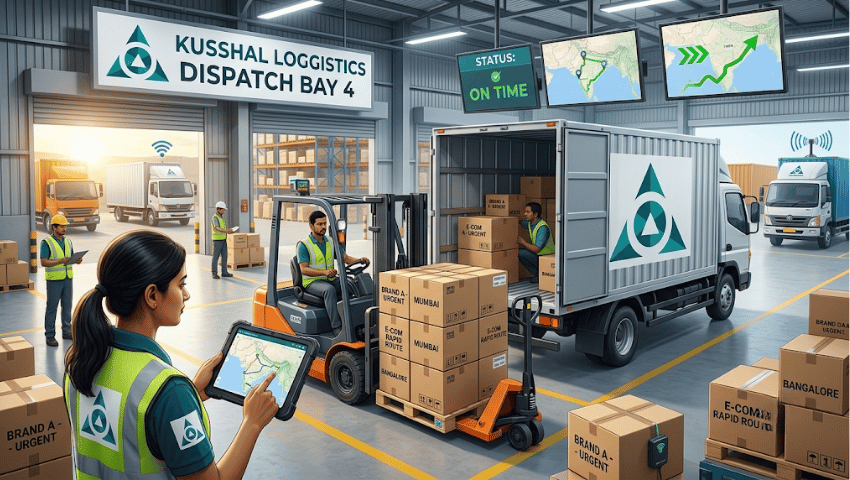
A customer places an order, the stock is available in the warehouse, and the delivery location is known. So, the order should ideally move out without much delay, right? In reality, dispatch and transportation are rarely that simple. An order may be ready, but picking takes longer than expected. The vehicle may not arrive on time, documentation may still be pending, or the transport team may not have clear information about which shipment needs to leave first.
Such small gaps can eventually turn into delayed deliveries and unhappy customers. This is why businesses need to look at warehousing and transportation as connected operations rather than two separate activities.
Professional warehouse dispatch and transport services in India can help create this connection. From processing an order inside the warehouse to assigning a vehicle and tracking the shipment, every stage can follow a planned process.
Why Do Dispatch Delays Happen Even When Stock Is Available?
Having inventory in stock does not necessarily mean it is ready to leave the warehouse.
Think about a distributor receiving 100 orders in a day. The warehouse team first needs to locate the right inventory for which they need to know where the inventory is kept, pick the required quantity, check it, pack it and prepare the necessary invoice or gatepass. Only then can the shipment be handed over for transportation.
Now, if stock locations are not properly mapped or inventory records do not match the physical stock, the team may spend considerable time simply finding products. Add manual paperwork and last-minute vehicle planning, and the dispatch schedule can quickly fall behind.
Hence, faster delivery actually begins inside the warehouse.
Make Inventory Easier to Find and Dispatch
One of the first requirements for improving dispatch speed is knowing exactly where the inventory is located.
Kusshal Loggistics uses WMS-supported warehouse operations that cover processes such as receipt, putaway, shelf and zone-level inventory tracking, FIFO, replenishment and cycle counts. When an order arrives, system-generated picklists can further support a more organised picking process.
This becomes particularly useful for businesses managing thousands of SKUs. Instead of depending heavily on manual knowledge of where a particular item has been kept, the warehouse can follow a structured inventory system.
Kusshal also supports barcode and handheld-device-based processes. Therefore, brands looking for warehouse dispatch and transport services in India can address the warehouse side of the problem before the shipment reaches the loading area.
Prepare Orders Through a Structured Outbound Process
There are several steps between receiving an order and loading it onto a vehicle.
Depending on the business, these may include picking, scanning, packing, labelling, invoicing and preparing gatepasses. Kusshal provides these operations along with value-added services such as kitting, repacking, shrink wrapping, bubble wrapping, barcoding and inventory consolidation.
More importantly, the process can be adapted according to how a company sells its products.
For B2B distribution, Kusshal offers box-in, box-out operations where goods generally move at carton level. For D2C and e-commerce businesses, box-in, piece-out operations allow individual products to be picked against consumer orders.
Thus, the same warehouse can be planned around the actual fulfilment requirements of the brand.
Connect Warehouse Dispatch Directly With Transportation
A common problem occurs when the warehouse and transport teams work independently. The warehouse may prepare the order without knowing vehicle availability, while the transport team may arrange a vehicle without having complete visibility of dispatch readiness.
Kusshal brings warehouse and transportation activities together through WMS and TMS-supported operations.
Its transport services include FTL, PTL, dedicated vehicles, last-mile fulfilment and multiple transporter management. Depending on shipment volume, destination and distribution requirements, an appropriate movement model can therefore be planned.
This integrated approach to warehouse dispatch and transport services in India can reduce the coordination gaps between preparing goods and actually moving them.
Improve Warehouse to Dealer Movement
Dealer and distributor networks present a different challenge. A brand may need to serve several dealers across a city or region, but sending a separate vehicle for every small order may not always make operational or financial sense.
Kusshal supports warehouse to dealer transport through distribution planning, dedicated vehicles and milk-run logistics.
Under a milk-run model, multiple deliveries can be consolidated into a planned multi-stop route. Instead of repeatedly sending partially utilised vehicles, orders for several dealers or stockists can travel together where suitable.
For brands with recurring dealer requirements, organised warehouse to dealer transport can help improve vehicle utilisation while maintaining planned distribution schedules.
Make Direct Customer Deliveries More Manageable
The growth of D2C and e-commerce has changed what businesses expect from warehouses. A facility may receive inventory in cartons but need to dispatch hundreds of individual customer orders.
This is where warehouse to customer delivery needs coordination between piece-level fulfilment and last-mile movement.
Kusshal supports piece picking, order processing, packaging and last-mile fulfilment as part of its wider logistics services. TMS capabilities further support vehicle and driver assignment, GPS tracking and automated SMS or email alerts.
Therefore, warehouse to customer delivery is not treated as an activity that starts only when a parcel leaves the facility. It begins with correctly processing the order inside the warehouse.
Use Shipment Visibility to Handle Delays Better
Not every transport delay can be eliminated. Traffic, route conditions and other external factors can still affect movement. However, there is an important difference between a delay that is visible and one that nobody discovers until a customer complains.
Kusshal's TMS supports real-time order tracking, GPS vehicle tracking and transporter management. Its WMS and TMS can also work together, providing visibility from warehouse processing to transportation.
For businesses using goods transport services in India, this visibility can make follow-ups more organised. Teams can monitor shipment movement and communicate updates rather than depending entirely on repeated calls between warehouses, transporters and customers.
Do Not Forget About Returns
Delivery is not always the final movement of a product. E-commerce returns, RTO shipments and goods that need to go back to a vendor can create another logistics flow.
Kusshal supports reverse logistics through its warehousing and transportation operations. Its WMS can help with marketplace return synchronisation, reconciliation, RTO and RTV processes, while reverse movement can be tracked at case and SKU level.
Hence, businesses evaluating goods transport services in India should also consider how efficiently the logistics partner can manage products moving in the opposite direction.
Fix the Warehouse If the Problem Starts There
Sometimes adding more vehicles will not improve delivery speed because transportation is not the actual bottleneck.
If products are difficult to locate, the warehouse layout is inefficient, picking takes too long or inventory mismatches regularly occur, the underlying warehouse operation needs attention.
Kusshal Loggistics offers warehouse consulting covering layout and storage design, material flow, SOP development, automation, material-handling equipment, IT selection and network planning. It also offers dedicated warehouses, multi-user facilities and in-plant warehouse management.
This makes it possible to improve the existing operation rather than simply adding another transport provider to an inefficient system.
What Does Better Dispatch Look Like in Practice?
Kusshal's own fashion-sector case study provides a useful example. The company describes an operation handling around 6,000 SKUs and 600,000 pieces where inventory mismatches, incorrect dispatches and dispatch delays of around 10 days were creating problems.
Kusshal states that it introduced inventory reconciliation, ABC analysis, cycle counting, QC checkpoints, handheld-device picking and automation. According to the case study, dispatch turnaround subsequently improved to 24 hours and physical versus system inventory reached approximately 99.9%.
The example shows why warehouse to customer delivery and dealer distribution cannot be improved by focusing only on the road journey. Inventory accuracy and dispatch discipline matter just as much.
Bring Your Warehouse and Transport Operations Under One Plan
Fast delivery is usually the result of several small operations working correctly together. The right stock needs to be available, picked accurately, packed on time, documented correctly, assigned to the right vehicle and tracked until delivery.
Kusshal Loggistics brings these functions together through warehousing, fulfilment, WMS, TMS, FTL/PTL movement, dedicated vehicles, warehouse to dealer transport, last-mile distribution, reverse logistics and goods transport services in India.
If delayed dispatches, poor transport coordination or limited shipment visibility are affecting your business, Kusshal can help you build a more organised movement from warehouse to destination.Talk to Kusshal Loggistics today to explore customised warehouse dispatch and transportation solutions for your distribution network.